IN BRIEF
A first regular income creates choices, but it can also create commitments before you have seen their full cost. Start with the money you actually receive, separate setup costs from ongoing bills, and build a plan that leaves you able to change direction as life changes.
Understand the money that actually arrives
Use payslips and bank records to establish income and its frequency. Services Australia recommends those records when making a budget. A salary figure alone does not show what is available after deductions or when it will arrive. [6]
For the first few pay cycles, check expected and actual amounts rather than immediately building fixed commitments around an estimate. Keep reimbursements and one-off payments separate from ordinary income. If you receive a salary package that includes non-cash or long-term components, do not treat the entire package as money available for rent and groceries.
List commitments before deciding what feels affordable
Moneysmart’s budget method begins with income and expenses, including debt and irregular costs, before setting savings goals. This order helps avoid a common mistake: choosing a rent, car or subscription payment because it seems small compared with payday, then discovering the other costs afterwards. [1]
Use current records where possible. Include housing, food, transport, phone, utilities, health costs, minimum repayments and future bills. A monthly average is useful for comparison, but keep due dates alongside it. An affordable annual total does not guarantee that the payment account has enough money in a particular week.
Price the move, not just the rent
Moneysmart separates ongoing living costs from one-off moving costs. Ongoing costs include rent, utilities, communications, groceries, transport and contents insurance. Setup costs can include bond, advance rent, connections, removal costs, furniture and permits. Check the actual lease and local requirements rather than assuming one figure applies everywhere. [2]
Before signing, create two lists: the cash required to move in and the recurring cost of staying there. Confirm whether the property is furnished and whether the location changes transport costs. A cheaper room can be more expensive overall if it introduces a large travel expense or other unavoidable cost.
Test the ongoing budget with a worked example
Do a trial while still in the previous living arrangement if practical: record the expected new costs and see whether the plan works on paper. That can reveal missing expenses before they become contractual commitments.
Agree how shared bills will work
Moneysmart recommends discussing bill payments, groceries and what happens when someone leaves a shared home. Understand who is responsible under the lease and service accounts. The fact that friends intend to reimburse you does not remove the cash-flow risk of paying a bill first. [2]
Keep a simple shared record of amounts, dates and reimbursements. Decide which expenses are genuinely shared and which are personal. Do not assume equal splitting is the only arrangement; the important thing is that everyone understands and agrees. Your own budget should show the amount and timing you are responsible for.
Audit the commitments that are easy to forget
Moneysmart recommends checking for subscriptions no longer used and fees or charges you do not recognise. Review them alongside phone, internet and other repeat payments. Small recurring costs deserve attention because they renew without a fresh decision each time. [3]
Before adding a new subscription, note the ongoing price, renewal date and cancellation terms. If a promotion changes later, enter the later price too. A temporary discount is not the same as a permanently affordable commitment. When you cancel something, confirm the cancellation and update the budget after the final charge.
Give the next goal a place without neglecting the buffer
Moneysmart recommends naming a savings goal, working out what is affordable and using a simple system to track progress. An emergency fund has a different job from travel or a planned purchase: it helps with urgent unexpected costs when other money is unavailable. [4][5]
Start with amounts that fit the budget. Keep the target and deadline visible, but do not assume every goal can be funded at once. If you are choosing between a deposit, a holiday and extra debt repayment, show the trade-off explicitly. A budgeting app can organise the choices; it cannot remove the need to choose.
Build a routine you can carry into the next life stage
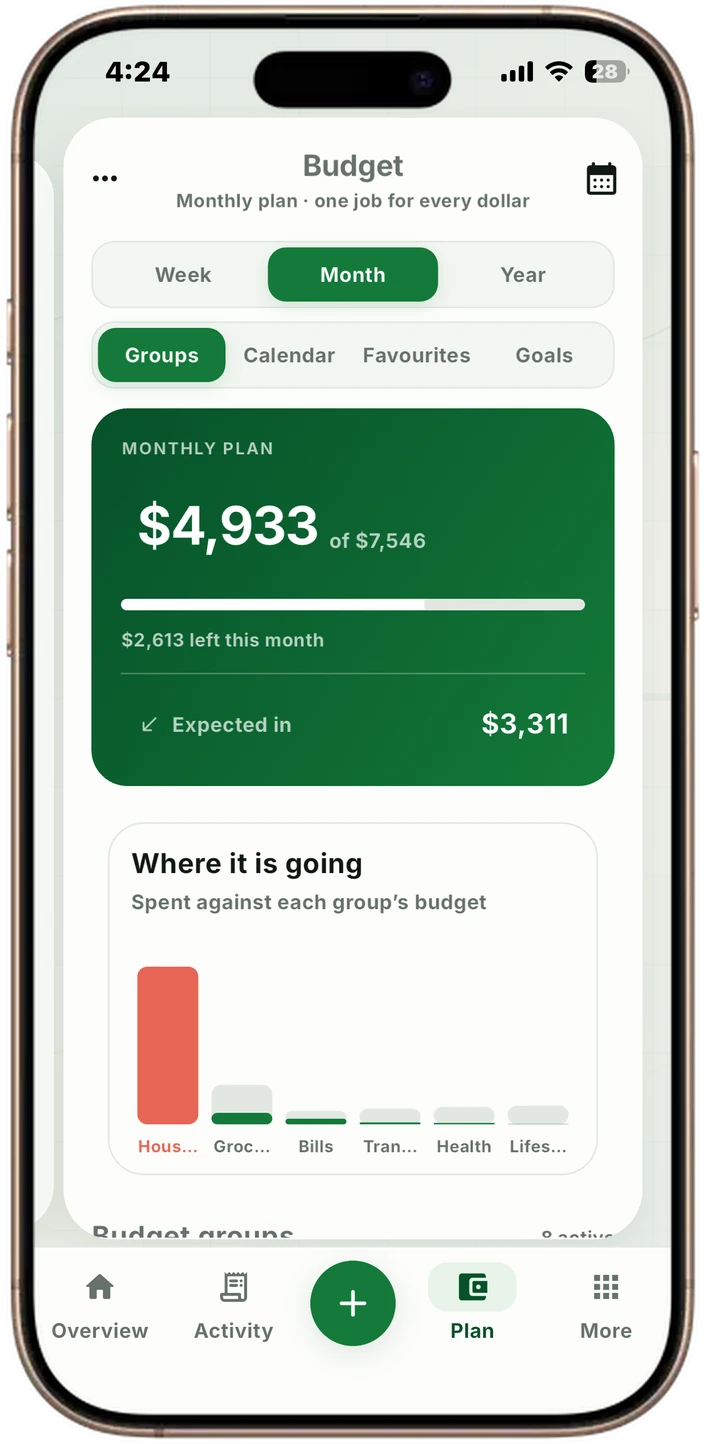
Use payday to check upcoming bills and a monthly review to compare the broader pattern. Revisit the plan after a move, new job, changed hours or a relationship change. Keep the categories useful rather than elaborate. The best early habit is being willing to look at the numbers and make a deliberate adjustment.
If essentials or repayments are not manageable, contact the National Debt Helpline on 1800 007 007. Financial counselling is free and confidential. Moneysmart lists phone hours of 9:30am to 4:30pm, Monday to Friday, and live chat from 9:00am to 8:00pm, Monday to Friday. Check the service website for availability. Legal action needs prompt legal advice, not just a different budget. [7]
Frequently asked questions
How much rent can I afford?
Work from the full budget and local costs rather than a universal percentage. Include utilities, transport, setup cash, existing repayments and future bills. A rent that fits one household may not fit another with the same income.
Should I save before moving out?
Compare the move-in costs and a practical buffer with your situation and timing. If moving is necessary, seek information about support and realistic arrangements. This guide cannot tell you to delay or proceed without knowing your circumstances.
How do I avoid lifestyle creep?
When pay rises, decide deliberately how much goes to changed costs, goals, debt or enjoyment before adding new fixed commitments. The aim is not to prevent spending more; it is to make the decision conscious and affordable.
Sources & further reading
Sources checked 30 September 2026. Follow the linked source for current rules and eligibility.
- ASIC Moneysmart — How to do a budget
- ASIC Moneysmart — Moving out of home
- ASIC Moneysmart — Track your spending
- ASIC Moneysmart — How to start saving
- ASIC Moneysmart — Save for an emergency fund
- Services Australia — Budgeting
- ASIC Moneysmart — Financial counselling
How this guide was prepared
Published by VULT and prepared with AI assistance using the sources linked above. The explanations and fictional examples are original educational writing; they are not personal financial, tax, legal or credit advice. No independent professional review is claimed. Where sources differ, the relevant official authority takes precedence for current rules. Reading time is estimated at 200 words per minute.
Found something that needs correcting? Send VULT feedback, including the guide title and the source you believe needs checking.